

In the early 1980s, the Satanic Panic swept across America, fueled by a mix of media sensationalism, religious conservatism, and fear of the unknown. What started with allegations of satanic rituals in daycares—such as the infamous McMartin Preschool Trial—soon ballooned into a full-blown moral panic. As fear grew, some of America’s most beloved brands found themselves caught in the crosshairs, and McDonald’s was no exception.
The fast food giant became a subject of bizarre rumors, with conspiracy theorists suggesting that Ray Kroc, the founder of McDonald’s, had donated large sums of money to the Church of Satan. This baseless claim, combined with the idea that the iconic golden arches had hidden occult meanings, led many to believe that McDonald’s was secretly involved in satanic practices. While completely unfounded, these rumors took on a life of their own during a time when society was gripped by paranoia.
The irony, of course, is that McDonald’s, a symbol of family-friendly dining, wholesome advertising, and children’s Happy Meals, was being painted as a front for something sinister. It became a prime example of how fear and rumors could spiral out of control, especially when amplified by media outlets looking for shocking stories to sell. Though the Satanic Panic eventually died down, its legacy left a lasting impact on how society views conspiracy theories and the power of moral hysteria.
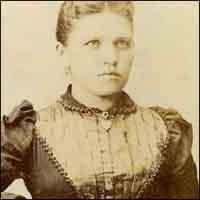
On the opposite end of the folklore spectrum is the eerie legend of Emily Isabella Burt, a young woman from Georgia who is said to have lived a very different kind of double life. Unlike the corporate conspiracy surrounding McDonald’s, Emily’s story is rooted in rural mystery and supernatural terror. She is known in local folklore as Georgia’s werewolf.
Emily was born into the wealthy Burt family, who lived in the town now known as Woodland, Georgia. The family’s wealth and prominence in the area could not shield them from the eerie rumors that began to surround their daughter. Emily was known to have unusually sharp canine teeth, which fueled speculation about her true nature. As the legend goes, she suffered from insomnia and would often disappear into the night, with locals reporting strange sightings of a wolf-like creature roaming the woods nearby.
The story goes that Emily’s mother became concerned with her daughter’s erratic behavior and sent her to Europe for treatment. While the exact nature of this “treatment” remains unclear, folklore suggests that Emily was sent away in hopes of curing her of lycanthropy—the mythical condition of turning into a werewolf.
After Emily returned from her trip, the rumors only intensified. Some say the strange wolf sightings ceased when Emily left for Europe, only to return once she came back home. Locals began to avoid the Burt family, whispering about the mysterious young woman with the sharp teeth and nocturnal habits.
In some versions of the story, Emily eventually succumbs to her fate as a werewolf, living out her days in seclusion. Other accounts suggest that she continued to live a relatively normal life, with the legend of her being a werewolf simply fading into the local folklore. Regardless of which version is true, the story of Emily Isabella Burt has endured, becoming a staple of Georgia’s supernatural history.

The stories of McDonald’s and the Satanic Panic, along with the legend of Emily Isabella Burt, offer a fascinating glimpse into how myths and paranoia can shape public consciousness. While the rumors about McDonald’s have long since been debunked, and the werewolf tales remain speculative at best, these stories continue to live on as part of our shared cultural history. They remind us that the lines between fact and fiction are often blurred, especially when fear is involved.


 The Paranormal Howl Hour Podcast
Leave a comment